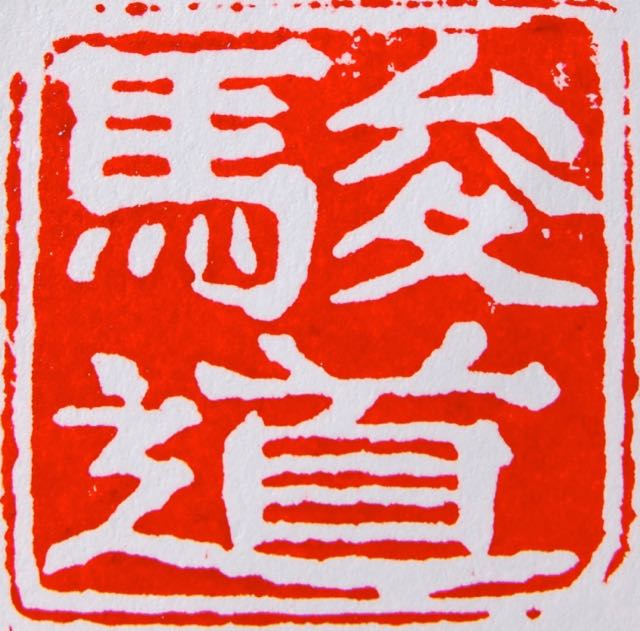
The shuso ceremony, as I have mentioned before, marks the point when a student, fielding questions from the entire assembly, becomes a teacher. It took me many years to appreciate the intricate, and very Japanese, make-up and choreography of this particular ritual. I have seen it from three sides now – on the east side of the assembly as a newer student, in the centre as the shuso, and now on the west side as a former shuso.
Before the questioning, also known as dharma combat, the shuso reads a koan, traditionally the first case of the Blue Cliff Record (which they will offer a commentary on after all the questions) and then ritually exchanges the book for a staff, which is offered by the abiding teacher. Back on their seat, holding up the staff, which at Tassajara was a length of bamboo, the shuso offers this statement, filled with allusions from Buddhist tradition, placing them firmly in the teaching lineage:
‘This is the dharma staff, five feet long. Once a black snake, on Vulture Peak it became the udumbara flower. At Shaolin Temple it burst forth the five petals of zen. Sometimes it is a dragon, swallowing heaven and earth; sometimes a vajra sword, giving and taking life. This staff is now in my hands. Though just a mosquito biting an iron bull, I cannot give it away. Dragons and elephants, let us call forth the dharma: give me your questions!’
It was fun to go looking through my archives to find pictures, though these are all from my time at City Center – the ceremony at Tassajara is too formal for cameras.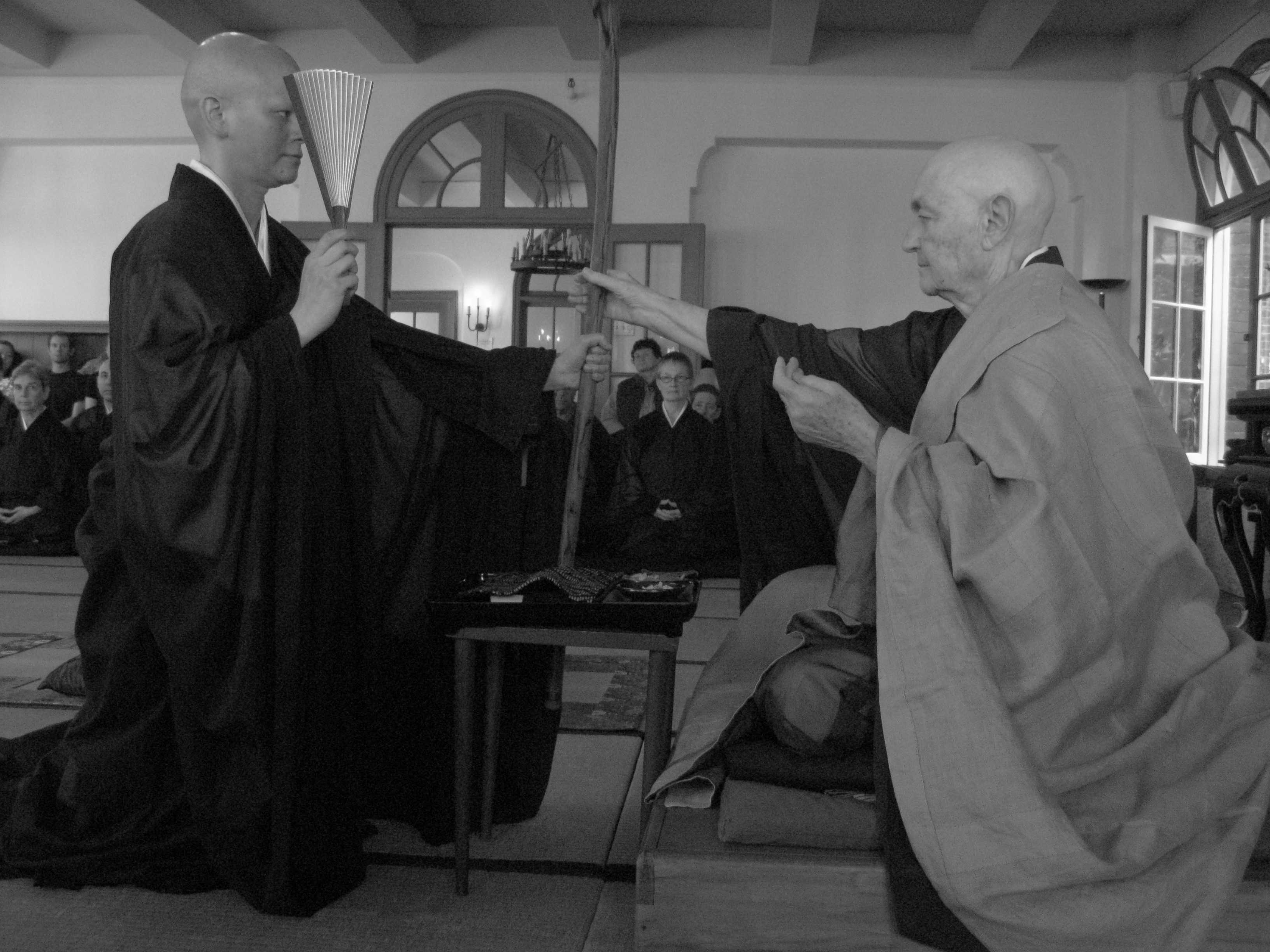
Liên receives the staff from Blanche; the symbol of teaching authority is temporarily passed on.
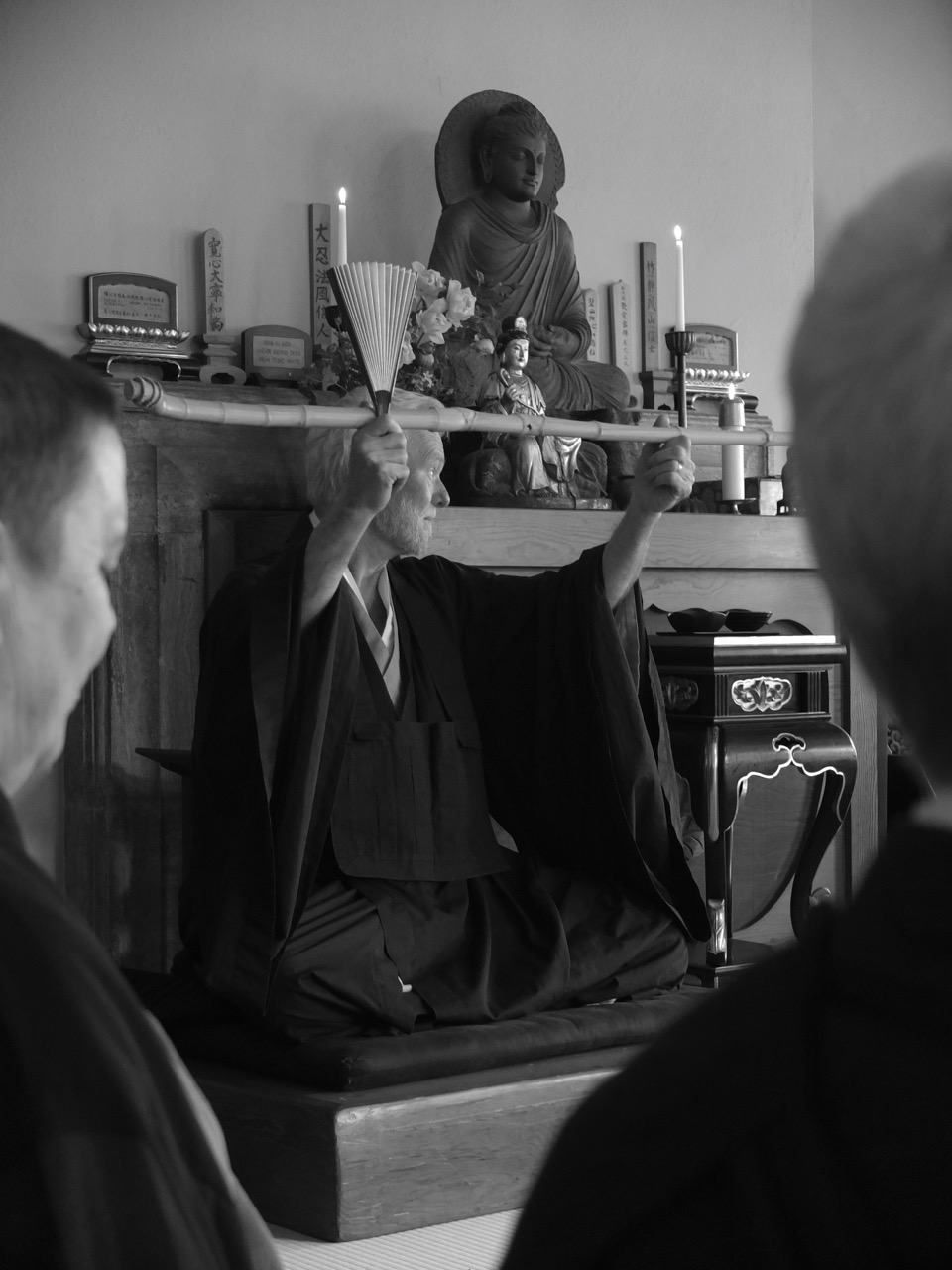
Gib holds the staff up in the traditional position as he listens to the benji, his attendant, reading a poem about their practice together, just ahead of his making the statement above.

Konin holds the staff as she responds to a student’s question. The shuso strikes the staff on the ground to mark the end of the exchange. The energy with which the shuso does this, and meets each question, reveals the quality of the teacher-to-be.


 Shundo David Haye - Zen Priest
Leave a reply to Shalamah Cancel reply